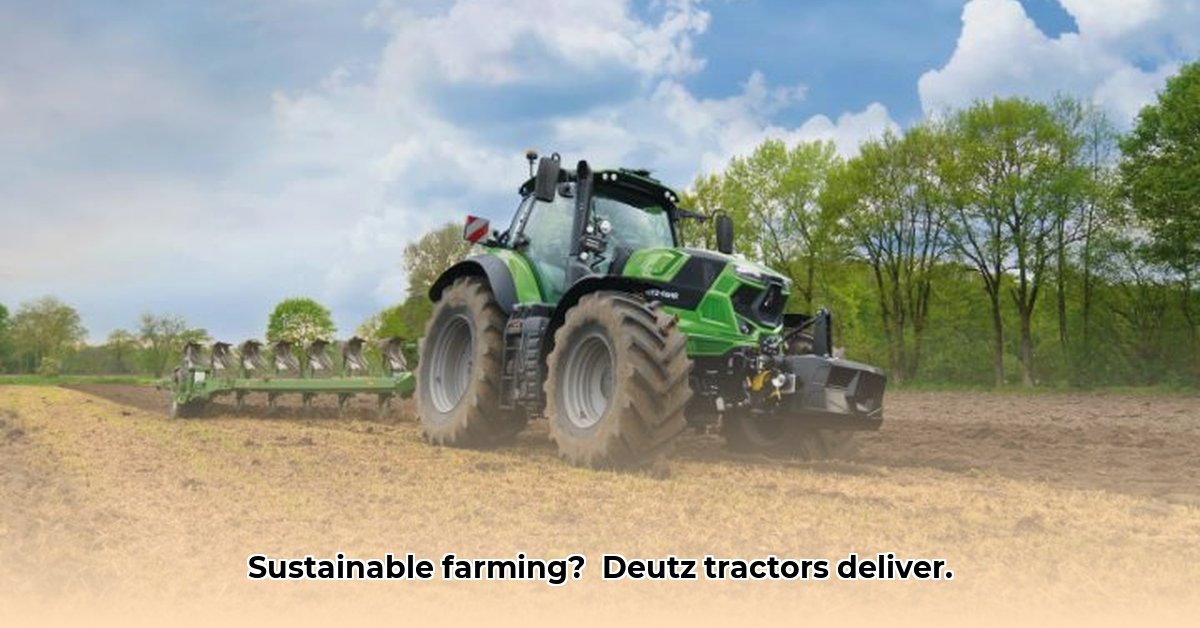
Sustainable agriculture is paramount, and Deutz-Fahr tractors are frequently positioned as a key component. However, a comprehensive assessment requires careful scrutiny beyond marketing claims. This article examines Deutz-Fahr's contribution to sustainable farming, acknowledging both its potential and the critical data gaps hindering definitive conclusions. For more information on Deutz-Fahr tractors, visit their website.
Deutz-Fahr: A Legacy of Reliability
Deutz-Fahr, a German manufacturer with a long history, boasts a global reputation for robust and dependable tractors. Millions operate worldwide, a testament to their durability. This inherent reliability potentially contributes to sustainability—less downtime translates to reduced fuel consumption and fewer part replacements. But reliability alone does not equate to environmental sustainability.
Defining Sustainable Agriculture Machinery
True sustainability in agricultural machinery extends beyond the machine itself. It encompasses the entire lifecycle: material sourcing, manufacturing, operation, and end-of-life management. Key metrics include fuel efficiency, greenhouse gas emissions, and the use of recycled or sustainably sourced materials. Without comprehensive data across this lifecycle, claims of sustainability remain unsubstantiated.
The Missing Data: A Critical Analysis
Currently, detailed data on the environmental impact of Deutz-Fahr tractors is lacking. Precise figures on fuel consumption per hectare, lifecycle greenhouse gas emissions, and material sourcing practices are unavailable. This lack of transparency prevents a full and accurate evaluation of their sustainability. How can we confidently assess environmental impact without complete lifecycle assessment (LCA) data?
Deconstructing the Tractor's Lifecycle
Assessing the sustainability of a Deutz-Fahr tractor demands a thorough examination of its lifecycle stages:
Manufacturing: The carbon footprint of Deutz-Fahr's manufacturing processes remains largely undisclosed. Data on the proportion of recycled or sustainably sourced materials used is crucial but currently missing. Transparency in manufacturing processes is needed to properly assess this stage.
Operation: Real-world fuel efficiency data across various models and operating conditions is necessary. Detailed information regarding greenhouse gas emissions during operation is also absent. Furthermore, the influence of operator practices on fuel efficiency and overall environmental impact requires investigation.
End-of-Life: Information on the recyclability and reusability of Deutz-Fahr tractors at the end of their service life is scarce. The environmental consequences of disposal and the existence of sustainable disposal strategies require further clarification. Are components effectively recycled? Are end-of-life management plans environmentally sound? These questions remain unanswered.
Without comprehensive data across these stages, claims regarding the environmental footprint of Deutz-Fahr tractors are premature. The absence of this information critically hinders a conclusive sustainability assessment.
Pathways to Greater Sustainability: Recommendations
To enhance the sustainability performance of Deutz-Fahr tractors, a multi-faceted approach is needed, involving the manufacturer, end-users, researchers, and policymakers:
Deutz-Fahr's Responsibility: The company should conduct and publicly release comprehensive LCAs for all its tractor models. This includes transparent reporting on material sourcing, manufacturing processes, and end-of-life management. Investment in research and development focused on sustainable materials and improved manufacturing processes is essential.
Informed Farmer Decisions: Farmers need access to comprehensive data on total cost of ownership (TCO), including fuel costs, maintenance, and potential environmental levies. Precision farming techniques and optimized operating practices can significantly reduce fuel consumption and environmental impact.
The Role of Research: Independent research is vital. Collaborations between researchers, Deutz-Fahr, and farmers can establish standardized sustainability metrics for agricultural machinery. Independent verification of reported data is crucial for building trust.
Policy and Incentive Programs: Governments can incentivize sustainable agricultural machinery through targeted policies such as tax benefits, subsidies, and stricter emission regulations. This framework can drive innovation in the agricultural machinery sector.
Only through collaborative efforts and data transparency can we accurately assess Deutz-Fahr's contribution to sustainable farming. The journey towards truly sustainable agriculture hinges on robust, comprehensive data and a commitment to transparency across the entire lifecycle. This is not just about the tractor; it's about the entire farming system.